Author Archives: MantasCode

Words used in Reddit’s usernames (430,000 users)

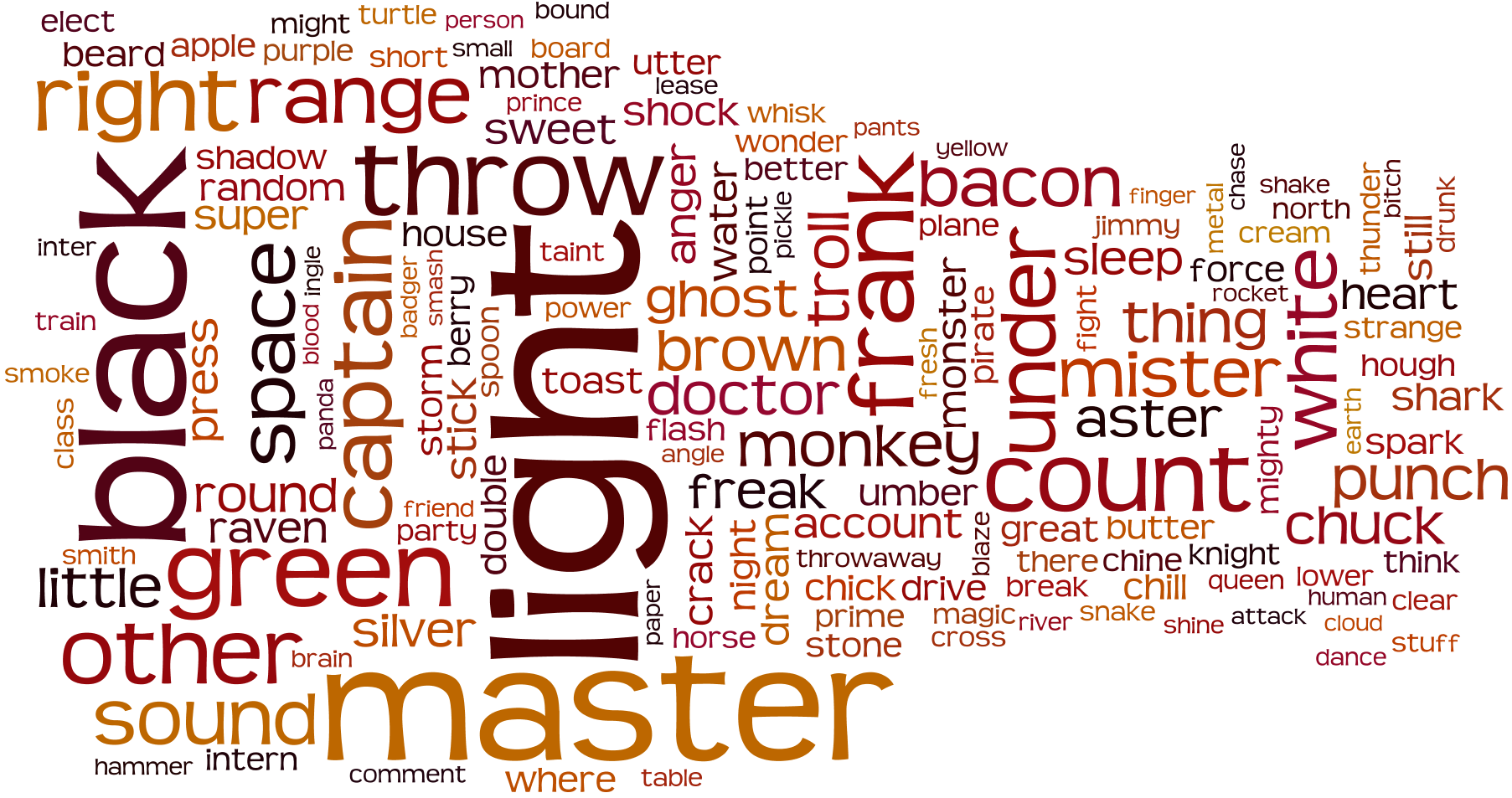
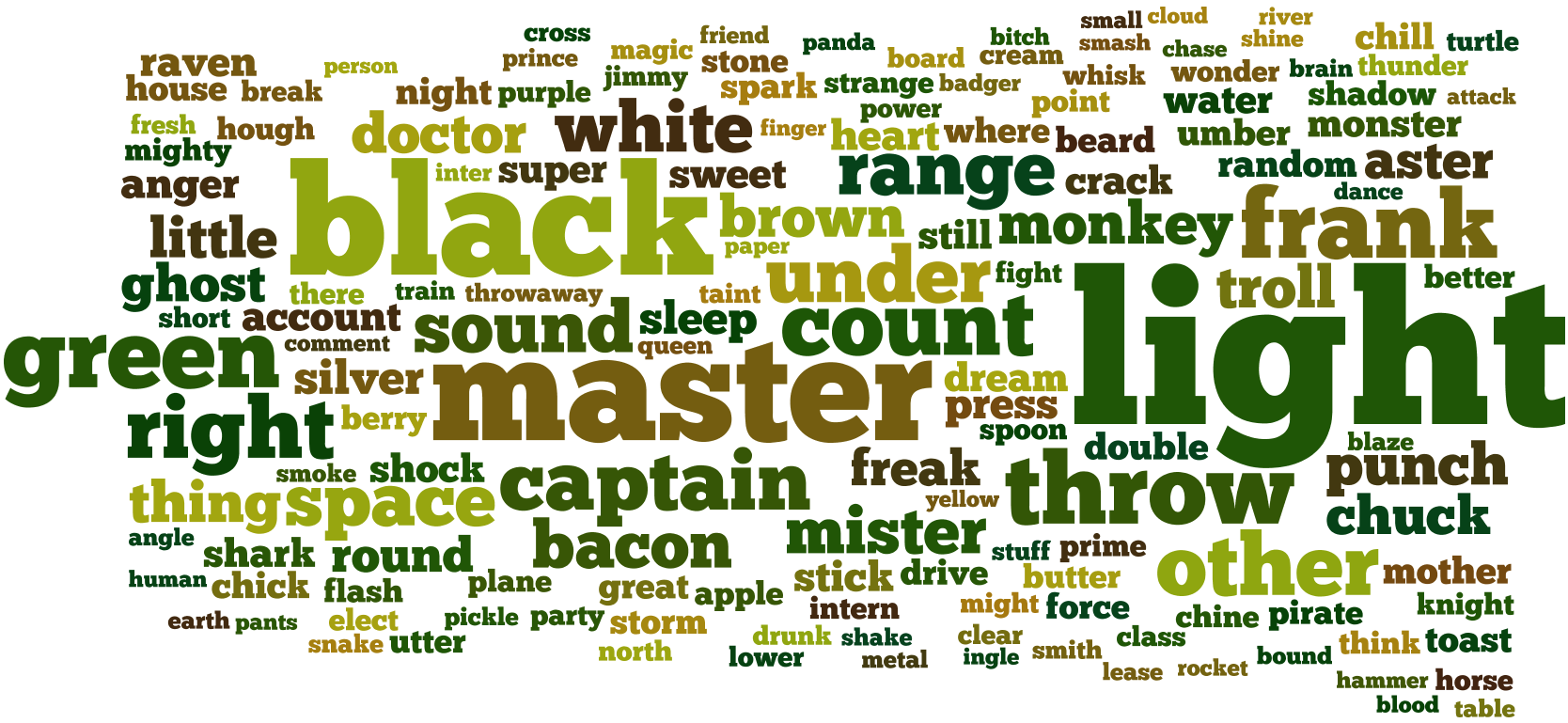
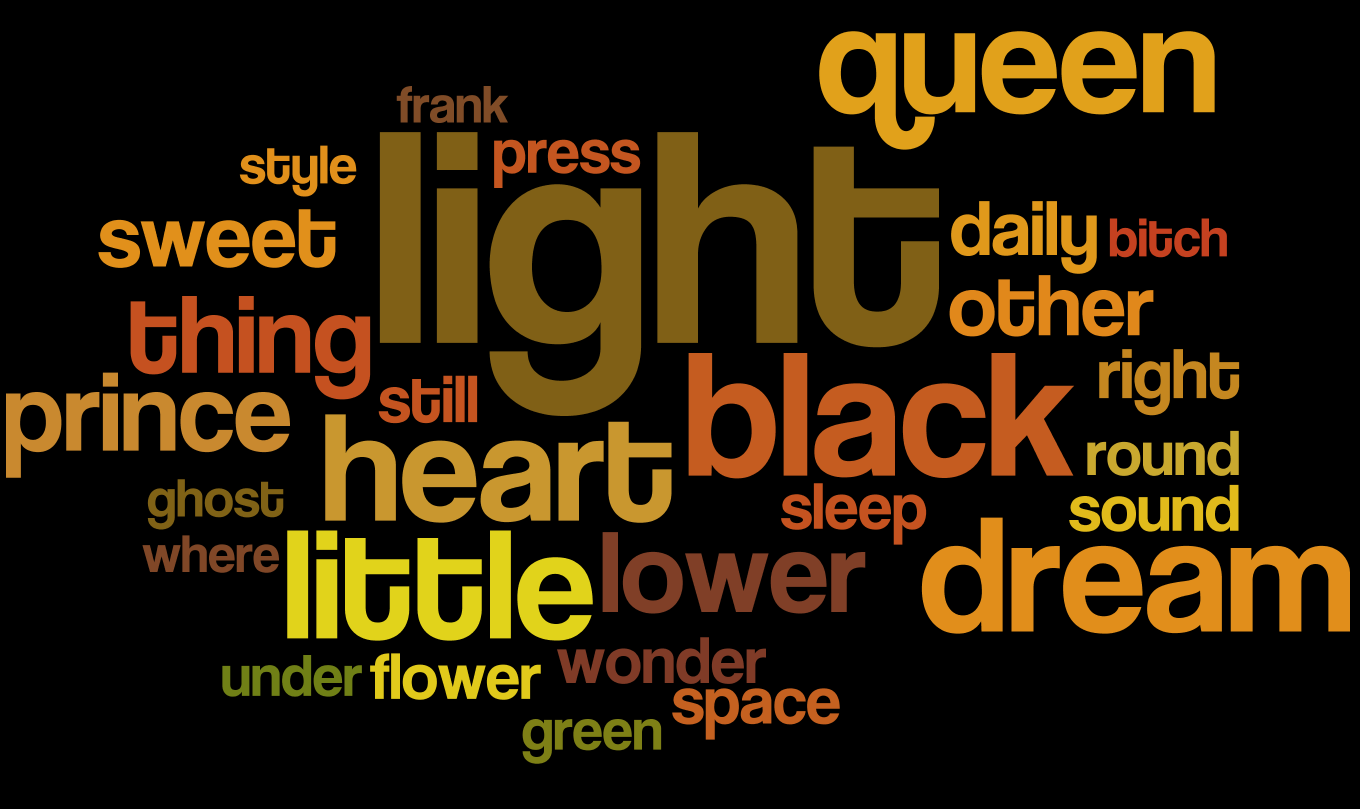
A Word Cloud of English words used within 430K Reddit usernames.

The data is from here. It was uploaded by reddit user Phycoz, in response to my previous post about Tumblr. Dictionary words searched and counted, were limited by greater than 4 characters in length. The same c# code from the previous post, Words used in Tumblr’s usernames (380,000 users) was used. Wordle for rendering the image.

redditusers_wordcloud_1

redditusers_wordcloud_2

Words used in Tumblr’s usernames (380,000 users)

The data is a parse of 380,000 usernames. Link Here

C# was written to:

  • parse an English dictionary for words. Link here
  • parse all tumblr usernames
  • search for each English word with a length of 5 or greater within each username
  • store each English word found, and count its frequency throughout all names
  • Wordle was used to generate a word cloud of the most frequent words.

Most Frequent English Words Found in TUMBLR’s Usernames
TUMBLR_USERNAME_ENGLISHWORDS
Continue reading

C#: Tumblr Blog Description Top Word Frequency List Visualization

Browsing reddit; I found a parsed dataset from Tublr. Link Here.
I used code from an older post to obtain a list of unique words, and their frequencies.
Next, I used a default TermCloud – Sample from GoogleCharts’s Additional Charts Gallery, to generate this image in a web browser.

Tublr blog description: words with a frequency greater than 5,000, ordered by most to least frequent.
FINAL_TUBLR_WORDFREQ

using System;
using System.Collections.Generic;
using System.Linq;
using System.Text;
using System.IO;
 
namespace ordertumblrwords
{
    class Program
    {
        static void Main(string[] args)
        {
            int counter = 0;
            string line;
            Dictionary<string, int> hashfreq = new Dictionary<string, int>();
            System.IO.StreamReader file =
               new System.IO.StreamReader("C:\\Book\\New folder\\OUTPUT.txt");
            while ((line = file.ReadLine()) != null)
            {
                string[] parts = line.Split(':');
                int freq = int.Parse(parts[1].ToString().Trim());
                hashfreq.Add(parts[0], freq);
                counter++;
            }
            file.Close();
            int q = 0;
            string masterstring = "";
            foreach (KeyValuePair<string, int> item in hashfreq.OrderByDescending(key => key.Value))
            {
                if (item.Value > 5000)
                {
                    Console.WriteLine("data.setValue(" + q + ", 0, '" + item.Key + "');");
                    Console.WriteLine("data.setValue(" + q + ", 1, "+item.Value+");");
                    q += 1;
                    masterstring += "data.setValue(" + q + ", 0, '" + item.Key + "');\r\n";
                    masterstring += "data.setValue(" + q + ", 1, " + item.Value + ");\r\n";
                }
 
            }
            StreamWriter streamWrite;
            streamWrite = File.AppendText("C:\\Book\\MANTASMAIN.txt");
            streamWrite.WriteLine(masterstring);
            streamWrite.Close();
        }
    }
}

Visualizing Project Euler Problem 58 using Processing/Java

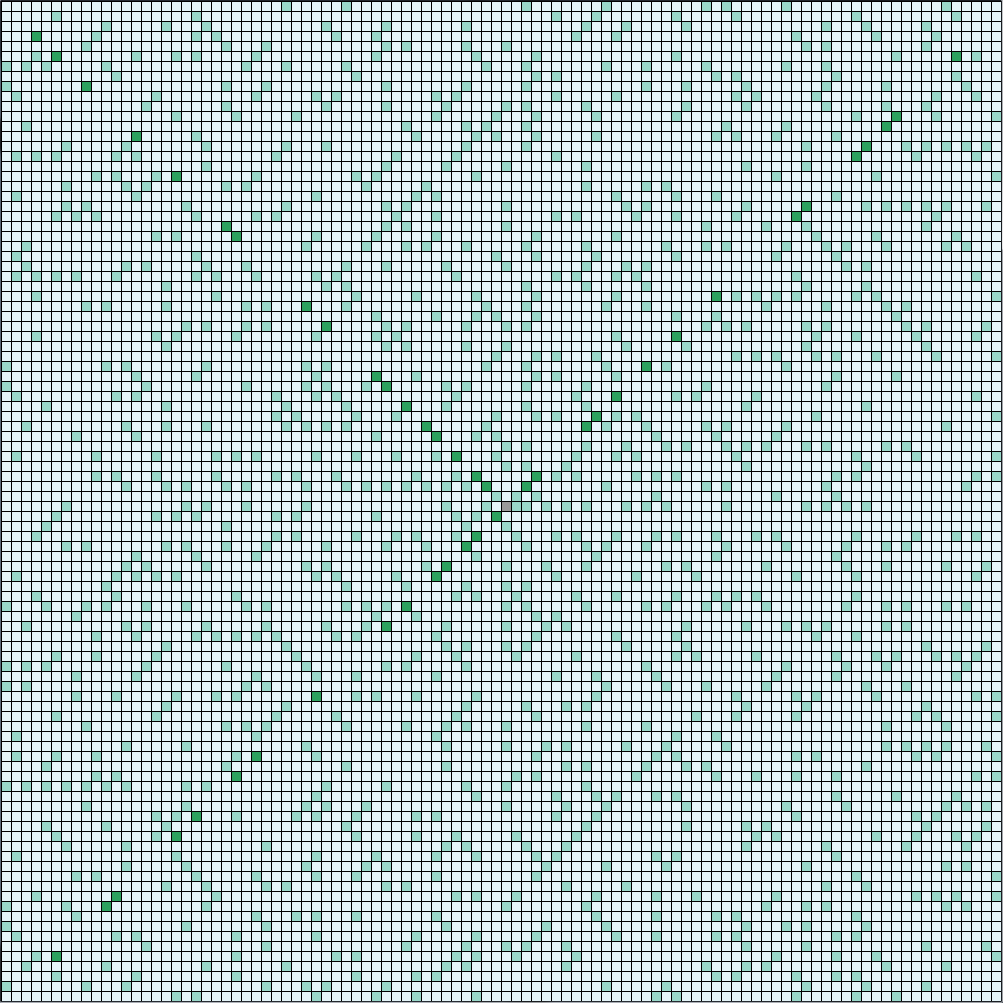
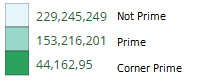
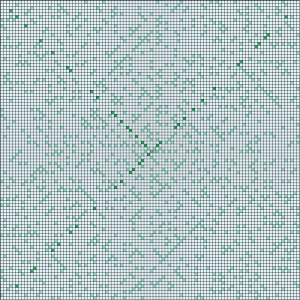
spiralprime2

Another visualization of Euler 58. This time, using Processing with Java.
Previous .NET winforms visualization of Euler 58
https://projecteuler.net/problem=58
primekey

spirialprimes

public int i_x = 500;
public int i_y = 500;
public static int Current_Direction = 0;
public int cur_step = 1;
public int skip_at = 7;
public int skip = 3;
public boolean first_turn = false;
public int count = 5;
public int diag_count = 4;
public int prime_count = 2;
 
void setup()
{
  size(1000, 1000);
  background(153);
}
 
void draw(){
  cur_step += 1;
  if ( isPrime(cur_step))
  {
    if (cur_step == skip_at)
    {
      fill(44,162,95);
    }
    else
    {
      fill(153,216,201);
    }
  }
  else
  {
    fill(229,245,249);
  }
 
  if (Current_Direction == 0)
  {
     rect( i_x + 10, i_y, 10, 10);
      i_x += 10;
  }
  else if (Current_Direction == 3)
  {
      rect( i_x, i_y + 10, 10, 10);
      i_y += 10;
  }
  else if (Current_Direction == 2)
  {
      rect( i_x - 10, i_y, 10, 10);
      i_x -= 10;
  }
  else if (Current_Direction == 1)
  {
      rect( i_x, i_y - 10, 10, 10);
      i_y -= 10;
  }
 
  if (cur_step &lt;= 3)
      Turn();
  if (cur_step == 5)//2
      Turn();
  if (skip_at == cur_step)
  {
      skip_at += skip;
      if (first_turn == false)
          first_turn = true;
      else
      {
          first_turn = false;
          skip += 1;
      }
      Turn();
  }
}
 
protected void Turn()
{
    if (Current_Direction == 3)
        Current_Direction = 0;
    else
        Current_Direction += 1;
}
 
public boolean isPrime(int n)
{
  if (n == 1)
        return false;
    if (n == 2)
        return true;
    for (int i = 2; i &lt; n; ++i)
    {
        if ((n % i) == 0)
            return false;
    }
 return true; 
}

pROCESSINGlEARNING
A fun little project whilst attempting to learn https://processing.org/

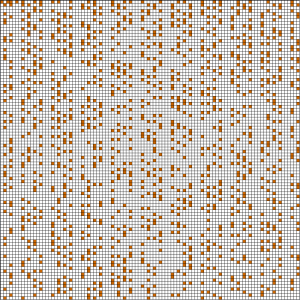
I draw 10 x 10 pixel boxes, 100 per row. If the number is a Prime, I highlight it in orange.

100X100PRIMES

Java

//Number Counter
public int i_num = 0;
//Draw Coordinates
public int i_x = 0;
public int i_y = 0;
 
void setup()
{
  size(1000, 1000);
  background(153);
}
 
void draw(){
 
      if ( isPrime(i_num))
      {
        fill(204, 102, 0);
        rect(i_x*10,i_y + 0,10,10);
      }
      else
      {
        fill(255, 255, 255);
        rect(i_x*10,i_y + 0,10,10);
      }
  i_x +=1;
  i_num +=1;
 
  //Go to Next Line
  if ( i_x == 100 )
  {
    i_x = 0;
    i_y += 10; 
  }
 
}
 
public boolean isPrime(int n)
{
  if (n == 1)
        return false;
    if (n == 2)
        return true;
    for (int i = 2; i &lt; n; ++i)
    {
        if ((n % i) == 0)
            return false;
    }
 return true; 
}

C#: Euler 46

EulerLEVEL2XXDD

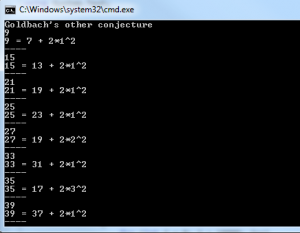
Goldbach’s other conjecture

https://projecteuler.net/problem=46
It was proposed by Christian Goldbach that every odd composite number can be written as the sum of a prime and twice a square.

static void Main(string[] args)
{
    Console.BufferHeight = 8000;
    Console.WriteLine("Goldbach's other conjecture");
 
    for (int n = 3; n < 100000; n+=2)
    {
        if ( !isPrime(n) )
        {
            Console.WriteLine(n);
            bool works = false;
            while (!works)
            {
                for (int abc = 1; abc < 50; abc++)
                {
                    for (int j = 0; j < 10000; j++)
                    {
                        if (isPrime(j))
                        {
                            double check = j + (2 * Math.Pow(abc, 2));
                            if ((j + 2 * Math.Pow(abc,2)) > n)
                                break;
                            if (n == check)
                            {
//Console.WriteLine(n + " = " + j + " + 2*" + abc + "^2");
                                works = true;
                            }
                            if (works)
                                break;
                        }
                    }
                }
            }
            Console.WriteLine("----");
        }
    }
}
 
public static bool isPrime(int n)
{
    if (n == 1)
        return false;
    if (n == 2)
        return true;
    for (int i = 2; i < n; ++i)
    {
        if ((n % i) == 0)
            return false;
    }
    return true;
}
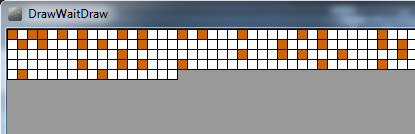
output
output

C#: Euler 36

https://projecteuler.net/problem=36

The decimal number, 585 = 10010010012 (binary), is palindromic in both bases.
Find the sum of all numbers, less than one million, which are palindromic in base 10 and base 2.

//Euler 36
static void Main(string[] args)
{
    int num = 0;
    int sum = 0;
    while (num &lt; 1000000)
    {
        num += 1;
        string sBits = Convert.ToString(num, 2);
        string sNum = num.ToString();
        if (isSym(sNum) &amp;&amp; isSym(sBits))
        {
            sum += num;
        }
    }
    Console.WriteLine("Answer : "+sum);
}
 
public static string Reverse(string s)
{
    char[] charArray = s.ToCharArray();
    Array.Reverse(charArray);
    return new string(charArray);
}
 
public static bool isSym(string n)
{
    double half = n.Length / 2;
    string a  = n.ToString();
    string b  = n.ToString();
    b = Reverse(b);
    string new_a = "";
    string new_b = "";
    for (int i = 0; i &lt; half; i++)
    {
        new_a += a[i];
        new_b += b[i];
    }
    if (new_a == new_b)
        return true;
    return false;
}

Visualizing Project Euler Problem 15 using C# Winforms | Lattice Paths

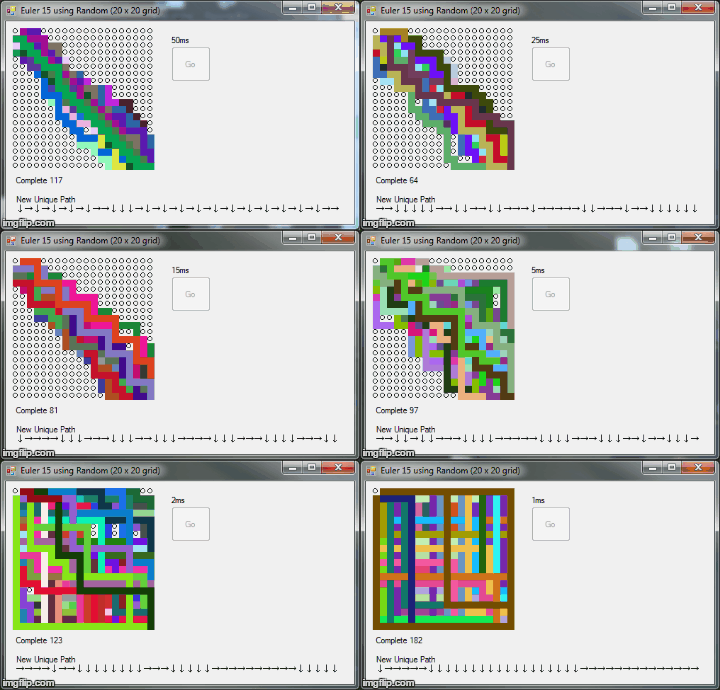
Mapping paths..

public static Brush aBrush = (Brush)Brushes.Black;
public static string path_collect = "";
public static LinkedList<string> complete_paths = new LinkedList<string>();
public bool wall = false;
public bool floor = false;
 
public static int miliseconds = 15;
 
public int current_x = 10;
public int current_y = 10;
 
 
public Form1()
{
    InitializeComponent();
}
 
 
private void Form1_Load(object sender, EventArgs e)
{
    label3.Text = miliseconds + "ms";
}
 
private void Form1_Paint(object sender, PaintEventArgs e)
{
    int x = 10;
    int y = 10;
    for (int i = 1; i < 21; i++)
    {
        for (int j = 1; j < 21; j++)
        {
            e.Graphics.DrawEllipse(Pens.Black, x* i , y *j, 6, 6);
        }
    }
}
 
private void bntPath_Click(object sender, EventArgs e)
{
    bntPath.Enabled = false;
    backgroundWorker1.RunWorkerAsync();
}
 
 
protected void Move(string path)
{
    Graphics g = this.CreateGraphics();
 
    foreach (char c in path)
    {
        if (c == '0')
        {
            g.FillRectangle(aBrush, current_x + 10, current_y, 10, 10);
            current_x += 10;
            path_collect += "→";
        }
        else if (c == '1')
        {
            g.FillRectangle(aBrush, current_x, current_y + 10, 10, 10);
            current_y += 10;
            path_collect += "↓";
        }
    }
 
    current_x = 10;
    current_y = 10;
 
    label2.Text = "New Unique Path\r\n" + path_collect;
 
    Brush NewBrush = new SolidBrush(GetRandomColor());
    aBrush = NewBrush;
    path_collect = "";
 
}
 
 
private void backgroundWorker1_DoWork_1(object sender, DoWorkEventArgs e)
{
    /*
    while (true) 
    {
        MoveRandom();
        Thread.Sleep(miliseconds);
    }
        */
    Int64 i = 0;
    Int64 count_unique_paths = 0;
 
 
    while (true)
    {
        string bits = Convert.ToString(i, 2).PadLeft(38, '0');
        string check = bits;
        check = Regex.Replace(check, "0", "");
        if (check.Length == 19)
        {
            Move(bits);
            //Thread.Sleep(50);
            count_unique_paths += 1;
            label4.Text = "Distinct Paths " + count_unique_paths;
        }
        i += 1;
    }
 
}
 
string row = "";
 
public bool completerow = true;
 
private Random random;
private Color GetRandomColor()
{
    random = new Random();
    return Color.FromArgb(random.Next(0, 255), random.Next(0, 255), random.Next(0, 255));
}
 
protected void MoveRandom()
{
    Graphics g = this.CreateGraphics();
    Random rand = new Random();
    int random = rand.Next(0, 2);
 
    if (random == 0)
    {
        if (!wall)
        {
            g.FillRectangle(aBrush, current_x + 10, current_y, 10, 10);
            current_x += 10;
            path_collect += "→";
        }
    }
    else if (random == 1)
    {
        if (!floor)
        {
            g.FillRectangle(aBrush, current_x, current_y + 10, 10, 10);
            current_y += 10;
            path_collect += "↓";
        }
    }
    CheckWall();
}
 
protected void CheckWall()
{
    if (current_x == 200)
        wall = true;
    if (current_y == 200)
        floor = true;
    if (wall && floor)
    {
        current_x = 10;
        current_y = 10;
        wall = false;
        floor = false;
        if (!complete_paths.Contains(path_collect))
        {
            complete_paths.AddLast(path_collect);
            label1.Text = "Complete " + complete_paths.Count;
            label2.Text = "New Unique Path\r\n" + path_collect;
 
        }
        Brush NewBrush = new SolidBrush(GetRandomColor());
        aBrush = NewBrush;
        path_collect = "";
    }
}

//Some fun with random paths at different speeds.
speed 50-1ms