Winforms c# application animating the daily market values of The Coca-Cola Company with piano emphasis.


Winforms c# application animating the daily market values of The Coca-Cola Company with piano emphasis.
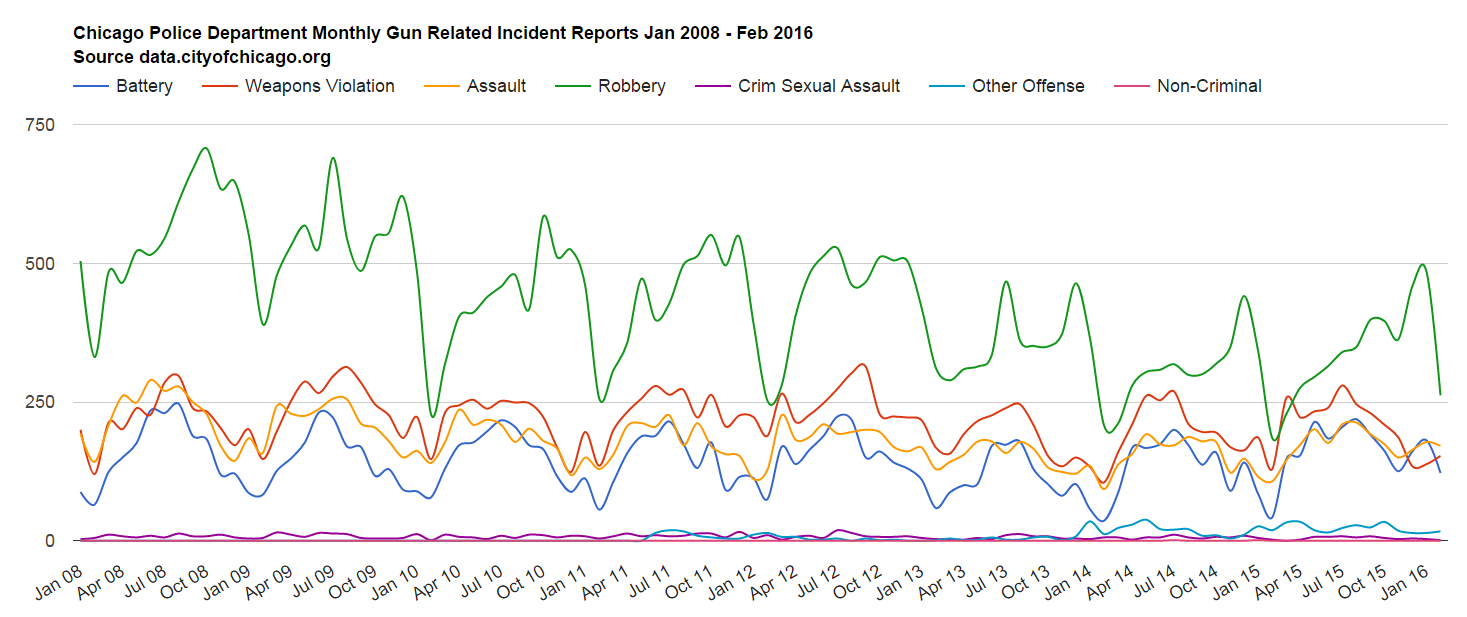
A look into Chicago Police Department’s gun related incident reports from January 2008 through February 2016. The data is from data.cityofchicago.org.
Stacked bar chart of monthly incidents by primary type.
Click chart image to expand

Line chart of monthly incidents by primary type.
Click chart image to expand
Static Map


Animated Map
Continue reading
I made a video of PARSING HTML USING REGULAR EXPRESSIONS.
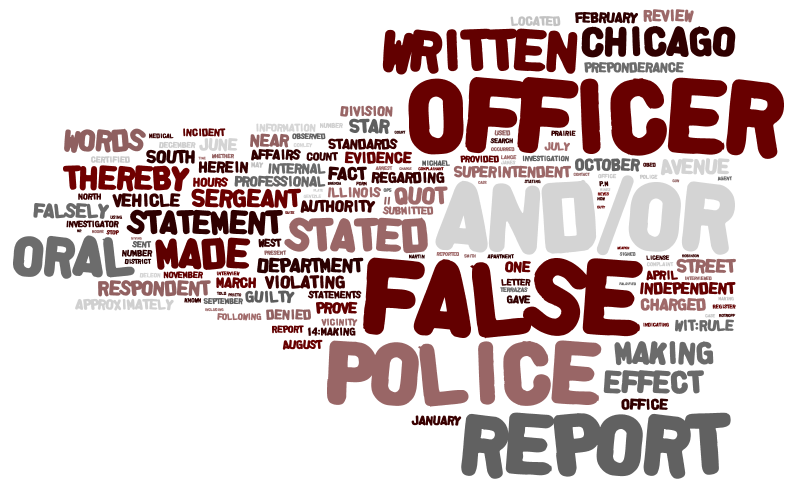
Here is the wordcloud image result of Rule 14 violations.
Here is the video with commentary of how I made it.
The data is from seanlahman.com.
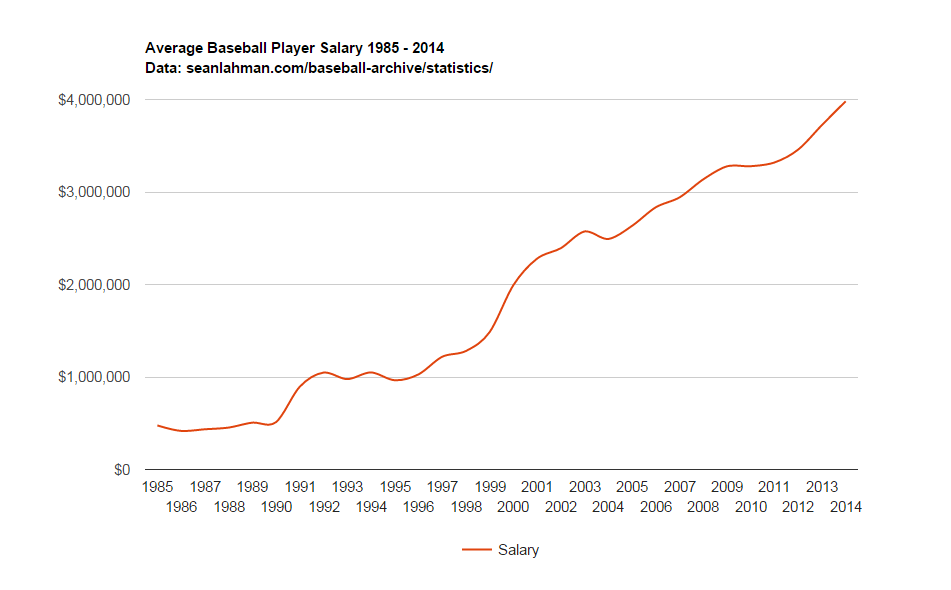
C# Console Application written to parse the csv dataset and create json output for a google charts line graph.
Continue reading
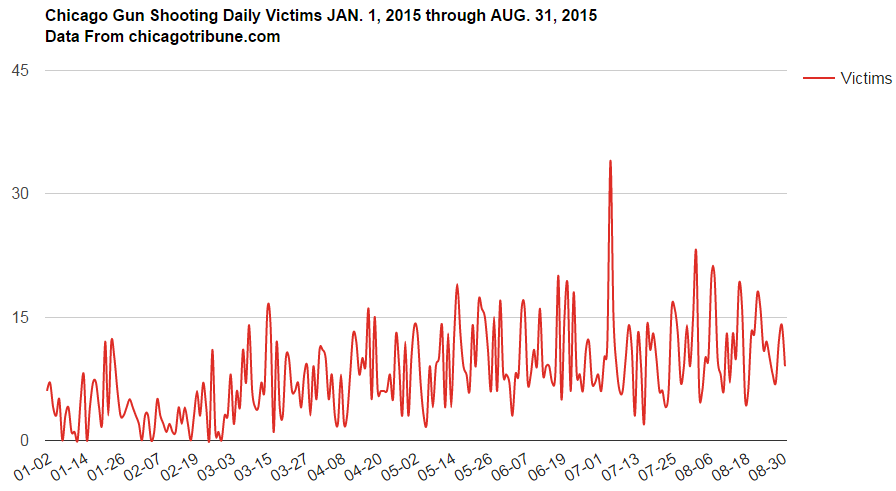
A different take on Chicago Tribune’s Gun Shooting visualizations. Time Range: JAN. 1, 2015 through AUG. 31, 2015.
The data was obtained and parsed from the Trib http://crime.chicagotribune.com/chicago/shootings
I made a daily line chart using Google Charts, and an overall intensity map using CartoDB.

I found an interesting dataset on political contributions in the state of Illinois.. The downloadable .zip contains multiple tab delimited database files which contain the relationships between Donations, Committees, and Candidates.
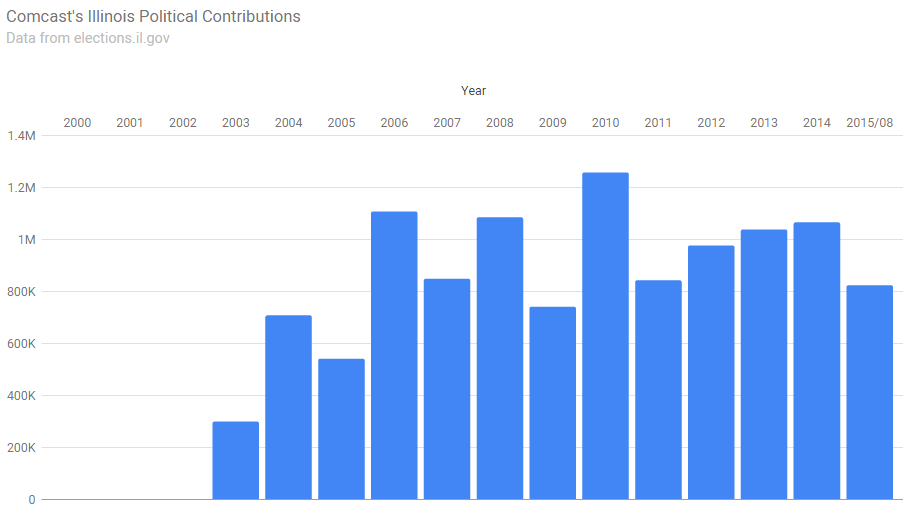
Out of curiosity in seeing Comcast’s political influence in Illinois over time, I parsed the 650,775mb file called Receipts.txt. Below is a bar chart of yearly recorded donation totals from 2000 through 2015-08.
Not being very politically oriented, I wanted to somehow relate the donations to candidates. But in the form of the available data, it appears Donors make contributions to Committees, and Committees support a Candidate. But I do not know if Candidates and Committees are a One to One relationship at the time of typing this.
Parsing the text file called CmteCandidateLinks.txt, I related the Committee Id with the candidate Id. Parsing the text file called Candidates.txt I relate the Candidate Id to the Candidate name.
Lots of candidate duplicates per donation entry. Majority of Committees represent the same candidate under different ids, while some committees represent multiple candidates. Example here:

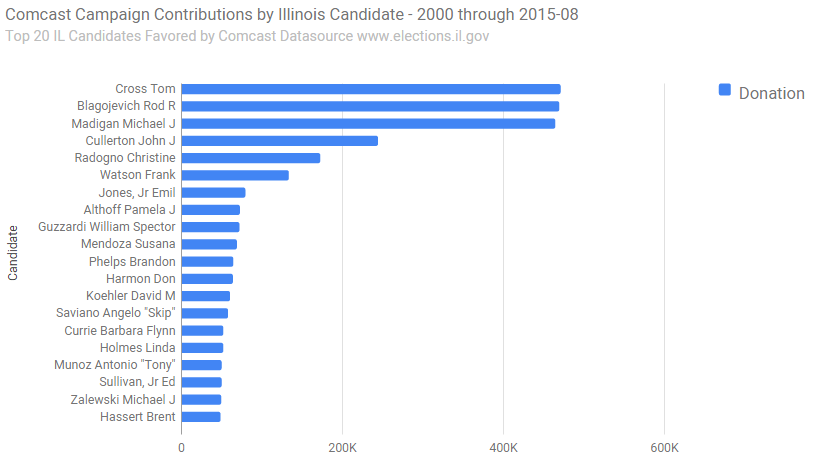
So I decided to distribute each donation amount between a potential multitude of candidates. I did this by dividing each donation by the number of candidates which belong to the committee recipient. From that, I got this list of Comcast’s Top Illinois Candidates.
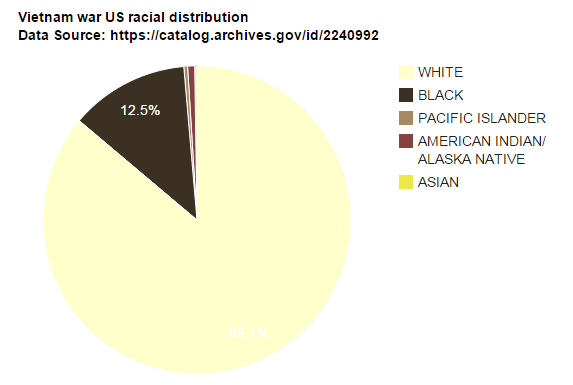
In this post I will be exploring some data I found about the Vietnam War.
The data is from The National Archives Catalog

The downloaded data file DCAS.VN.EXT08.DAT contains 58,220 records. Each row appears to be an individual involved in the war. I couldn’t make immediate sense of the cookbook documents, so I proceeded straight to parsing it raw. By eyeballing the values of each column I was able to determine the following attributes per row:
Name, Branch, Rank, Assigned Position, Gender, Hometown, Country, State, Relationship Status, Religion, Race, Mortility Status, and Reason of Death.
C# Console:
Console.BufferHeight = 4000; Console.WriteLine("Charlie in the Trees"); System.IO.StreamReader myFile = new System.IO.StreamReader(@"C:\VIETNAM\DCAS.VN.EXT08.DAT"); string vietnamData = myFile.ReadToEnd(); myFile.Close(); string[] lines = vietnamData.Split(new string[] { Environment.NewLine }, StringSplitOptions.None); int count = 0; foreach( string line in lines ) { string[] parts = line.Split('|'); Console.WriteLine("name : " + parts[4]); Console.WriteLine("branch : " + parts[6]); Console.WriteLine("rank : " + parts[7]); /* ... */ Console.WriteLine(); count += 1; } Console.WriteLine(); Console.WriteLine(); Console.WriteLine("total " + count); |
output
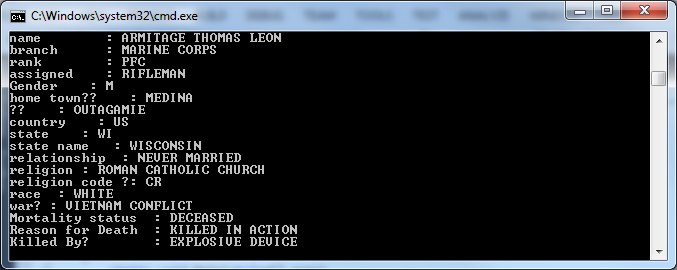
Alright, now that we’ve parsed the data, I typically ask myself these questions:
what is interesting?
what do I want to see?
what might be controversial?
what could invoke the attention of others?
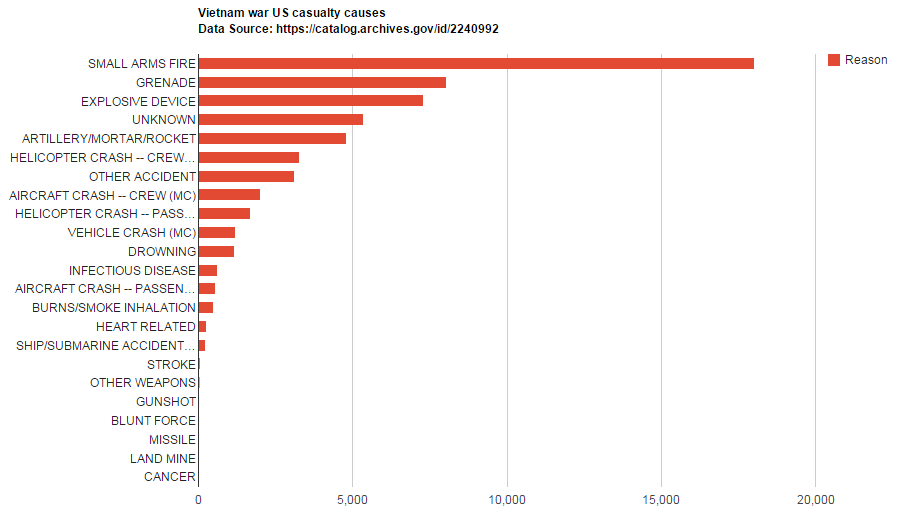
Dictionary<string, int> dictConcepts = new Dictionary<string, int>(); foreach( string line in lines ) { string[] parts = line.Split('|'); if (parts[43] == "DECEASED") { if (dictConcepts.ContainsKey(parts[45])) { int cur_count = dictConcepts[parts[45]]; cur_count += 1; dictConcepts[parts[45]] = cur_count; } else { dictConcepts.Add(parts[45], 1); } } } |
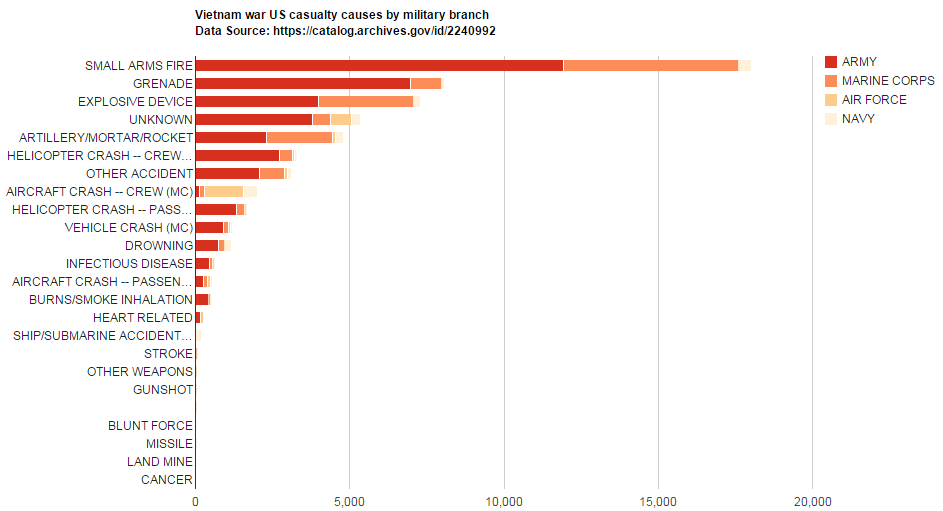
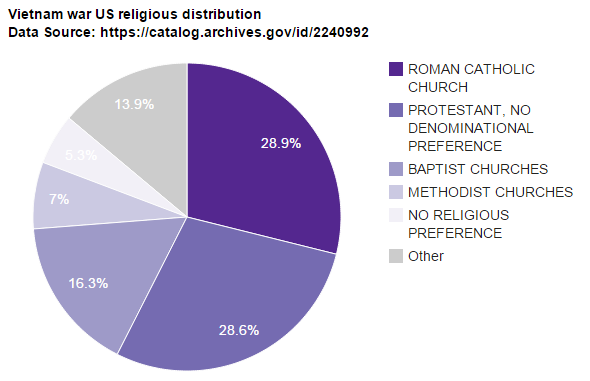
The data is a parse of 380,000 usernames. Link Here
C# was written to:
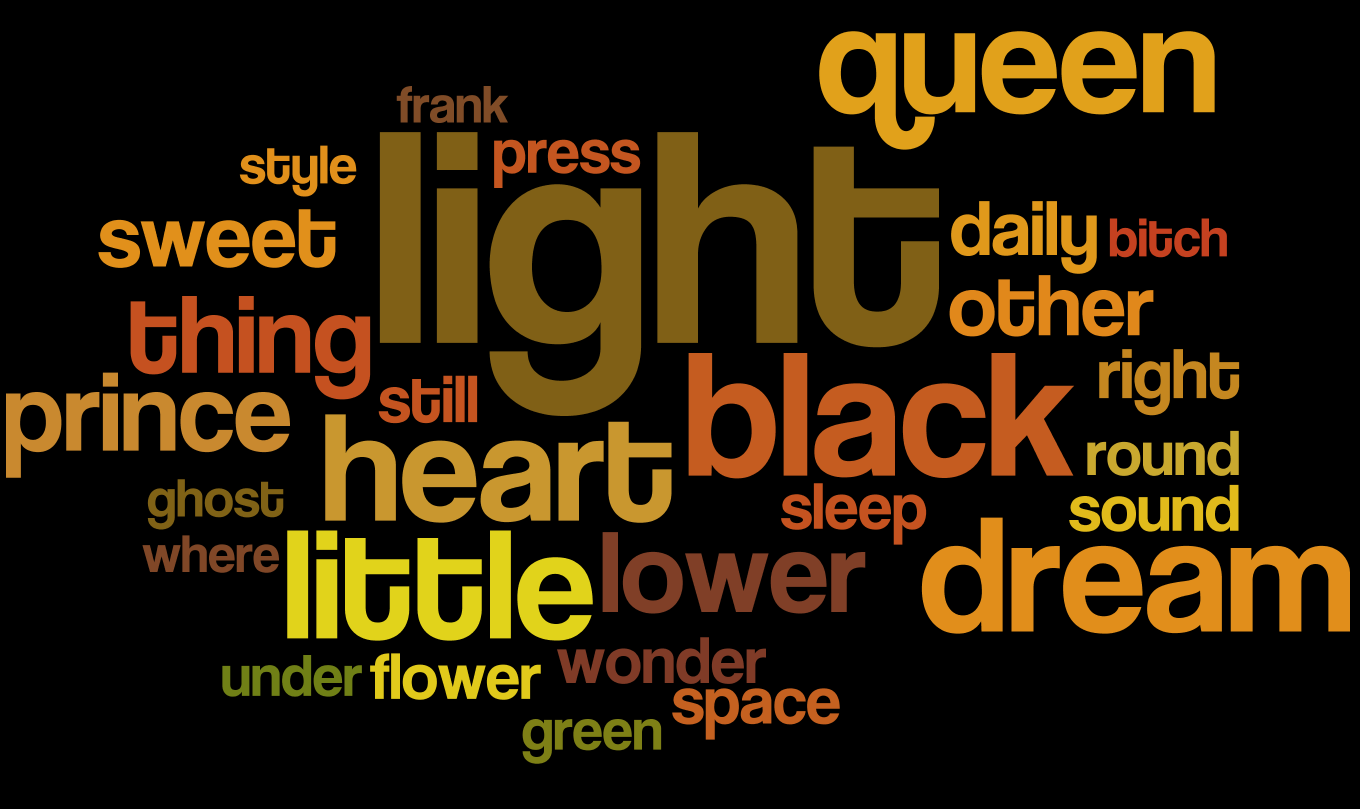
Most Frequent English Words Found in TUMBLR’s Usernames
Continue reading
Browsing reddit; I found a parsed dataset from Tublr. Link Here.
I used code from an older post to obtain a list of unique words, and their frequencies.
Next, I used a default TermCloud – Sample from GoogleCharts’s Additional Charts Gallery, to generate this image in a web browser.
Tublr blog description: words with a frequency greater than 5,000, ordered by most to least frequent.

using System; using System.Collections.Generic; using System.Linq; using System.Text; using System.IO; namespace ordertumblrwords { class Program { static void Main(string[] args) { int counter = 0; string line; Dictionary<string, int> hashfreq = new Dictionary<string, int>(); System.IO.StreamReader file = new System.IO.StreamReader("C:\\Book\\New folder\\OUTPUT.txt"); while ((line = file.ReadLine()) != null) { string[] parts = line.Split(':'); int freq = int.Parse(parts[1].ToString().Trim()); hashfreq.Add(parts[0], freq); counter++; } file.Close(); int q = 0; string masterstring = ""; foreach (KeyValuePair<string, int> item in hashfreq.OrderByDescending(key => key.Value)) { if (item.Value > 5000) { Console.WriteLine("data.setValue(" + q + ", 0, '" + item.Key + "');"); Console.WriteLine("data.setValue(" + q + ", 1, "+item.Value+");"); q += 1; masterstring += "data.setValue(" + q + ", 0, '" + item.Key + "');\r\n"; masterstring += "data.setValue(" + q + ", 1, " + item.Value + ");\r\n"; } } StreamWriter streamWrite; streamWrite = File.AppendText("C:\\Book\\MANTASMAIN.txt"); streamWrite.WriteLine(masterstring); streamWrite.Close(); } } } |

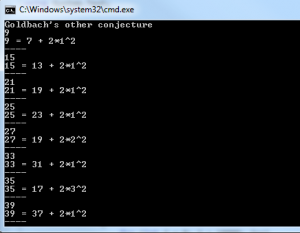
Goldbach’s other conjecture
https://projecteuler.net/problem=46
It was proposed by Christian Goldbach that every odd composite number can be written as the sum of a prime and twice a square.
static void Main(string[] args) { Console.BufferHeight = 8000; Console.WriteLine("Goldbach's other conjecture"); for (int n = 3; n < 100000; n+=2) { if ( !isPrime(n) ) { Console.WriteLine(n); bool works = false; while (!works) { for (int abc = 1; abc < 50; abc++) { for (int j = 0; j < 10000; j++) { if (isPrime(j)) { double check = j + (2 * Math.Pow(abc, 2)); if ((j + 2 * Math.Pow(abc,2)) > n) break; if (n == check) { //Console.WriteLine(n + " = " + j + " + 2*" + abc + "^2"); works = true; } if (works) break; } } } } Console.WriteLine("----"); } } } public static bool isPrime(int n) { if (n == 1) return false; if (n == 2) return true; for (int i = 2; i < n; ++i) { if ((n % i) == 0) return false; } return true; } |
output